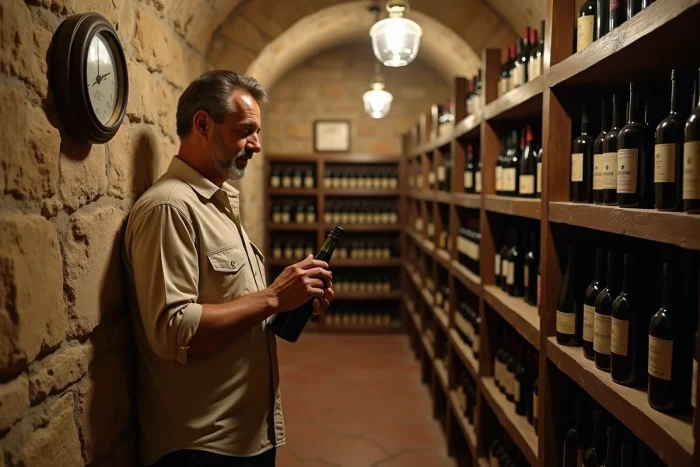
The wine storage temperature is the parameter that most directly influences the aging of a bottle. If it’s too high, it accelerates oxidation and flattens the aromas. If it’s too low, it slows down chemical reactions to the point of halting the wine’s evolution. Classic recommendations place the ideal range between 10 and 14 °C, but recent climatic conditions push for a more nuanced approach depending on the type of wine stored.
Natural cellars and thermal drift related to warming
For a long time, a limestone basement was sufficient to maintain a stable temperature year-round. This assumption has been called into question in recent years. Several wine unions, particularly in Burgundy and the Rhône Valley, have reported since 2022 an increase in seasonal temperature fluctuations in private cellars.
Repeated heatwaves warm the soil deeply. A basement that naturally remained at 12 °C can now reach 16 or 17 °C by late summer, before slowly dropping in the fall. This type of slow drift is the most dangerous because it goes unnoticed for weeks.
For those wishing to understand what the ideal temperature for a wine cellar is in this context, the answer depends as much on the building as on the local climate. An underground cellar in the south of France no longer offers the same guarantees as it did twenty years ago without a minimum of regulation equipment.
Wine storage temperature: the range to respect according to the profile
The general recommendation of 12 °C as the aging temperature remains a reliable benchmark for most wines. The available data does not allow for a single threshold applicable to all grape varieties and vintages, but several trends emerge.
Concentrated red wines and warm vintages
Oenologists affiliated with the OIV have suggested since 2022 that very concentrated or high-alcohol reds be stored between 11 and 13 °C rather than at 14 °C. The reasoning is straightforward: vintages from warm harvests contain more residual sugars and alcohol, which accelerates oxidation. Slightly lowering the storage temperature partially compensates for this risk.
White and sparkling wines
Dry whites, sweet whites, and champagnes store better at lower temperatures, generally between 10 and 12 °C. A white wine stored at 14 °C for several years risks losing its aromatic freshness long before reaching its optimal maturity.
Consistency matters more than the absolute value. A sudden shift of a few degrees in a few hours causes the liquid in the bottle to expand, which can push the cork and allow air to enter. Field reports vary on the exact tolerance threshold, but most professionals agree that a variation of more than 2 °C in a day poses a real problem.
Connected systems and detection of temperature drift in cellars
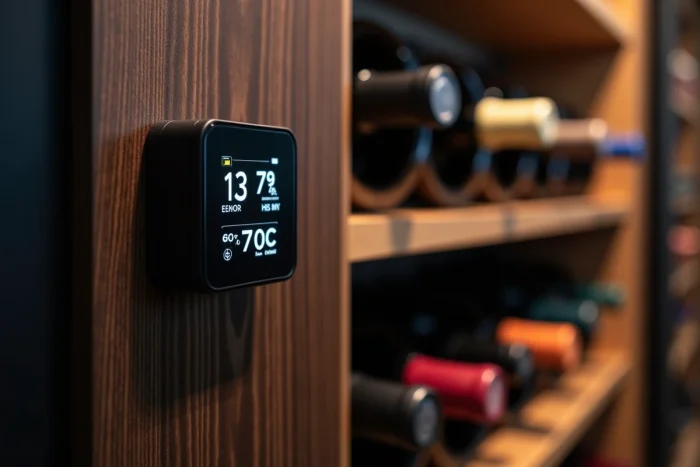
The addition of specific air conditioning has become common in underground cellars exposed to summer heat. Manufacturers of electric wine cellars have also evolved their ranges. Since 2023, mid-range and high-end models include connected systems capable of alerting in real-time about temperature deviations beyond 1 to 2 °C from the setting.
This function responds to an insurer’s observation: according to the French Insurance Federation, declared incidents related to wine cellars are mostly linked to slow and undetected temperature drifts. A weakening compressor, a poorly closed door, a prolonged power outage during vacations – all scenarios where the bottle deteriorates without visible external signs for weeks.
Here are a few criteria to check before investing in an equipped cellar:
- The accuracy of the thermal probe: some models claim a tolerance of plus or minus 1 °C, while others go down to 0.5 °C, which makes a real difference for long aging.
- The type of alert: notification on smartphone, local sound alarm, or both. An SMS alert remains useful in case of Wi-Fi outage.
- The presence of a humidity sensor coupled with the temperature sensor, as humidity directly influences the condition of the cork and thus the bottle’s seal.
Humidity and light: parameters that temperature alone does not cover
Setting the temperature of your cellar without controlling humidity amounts to addressing half the problem. A humidity level that is too low dries out the cork, causing it to shrink and let air in. A level that is too high promotes mold on labels and can degrade storage boxes.
The generally accepted range is around 70 to 75% humidity. High-end electric cellars automatically regulate this parameter. For a natural cellar, a water tray or a dirt floor helps maintain a correct level, but these artisanal solutions require regular checking.
Light is another often underestimated factor of degradation. Ultraviolet rays trigger photochemical reactions in wine, particularly in clear glass bottles. Storing bottles away from any direct light source remains a basic precaution, even for cellars equipped with interior lighting (prefer cold LED lights with low UV emissions).
Service temperature and storage temperature: two distinct logics
Confusing storage temperature with tasting temperature is a common mistake. A bottle of red wine stored at 12 °C is not served at 12 °C. Most reds express their aromas better between 16 and 18 °C, which means taking the bottle out of the cellar one to two hours before serving.
For whites and rosés, the logic reverses: they benefit from being served cooler than their storage temperature, often between 8 and 10 °C. A stint in the refrigerator for about thirty minutes before opening is usually sufficient.
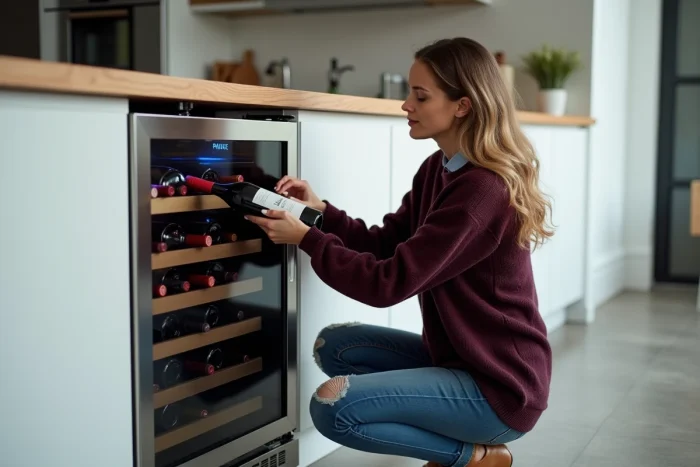
So-called “multi-temperature” cellars attempt to meet both needs in one device, with zones set differently. The compromise works for regular consumption. For aging over several years, a single-temperature cellar set between 11 and 13 °C remains the safest choice, as it limits interactions between zones and reduces strain on the compressor.
Setting the cellar temperature is not a trivial gesture. Current climatic conditions, the characteristics of recent vintages, and the variable quality of corks make this parameter more sensitive than it was a decade ago. Regularly checking thermal stability, monitoring humidity, and adjusting the setting according to the type of wine stored are the three concrete levers to protect a collection in the long term.