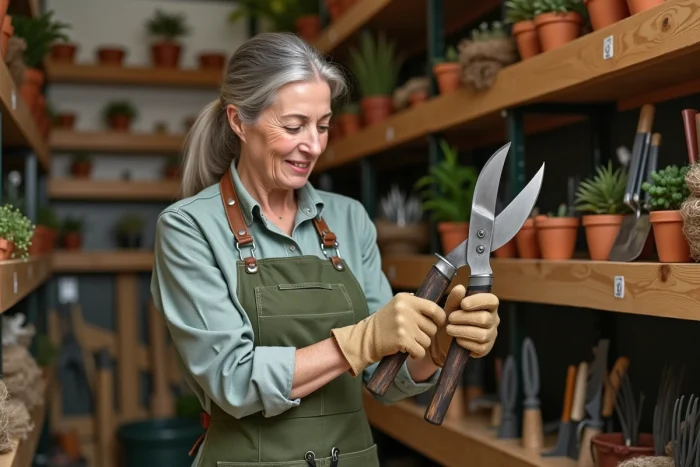
Choosing suitable garden equipment depends on three technical parameters: the nature of the soil, the area to be covered, and the type of vegetation present. A compact clay soil cannot be worked with the same tools as a light sandy soil, and a hedge of thujas is not trimmed like a bed of roses. Starting from these physical constraints avoids unnecessary purchases and guides you towards equipment that is truly sized for the work to be done.
Battery or gas: what the regulations change for choosing a garden tool
The European regulation 2016/1628, updated in 2023, regulates emissions from non-road engines and encourages manufacturers to reduce the availability of the most polluting gas-powered tools. In practice, the offering is quickly shifting towards cordless electric, driven by the battery ranges from Stihl, Husqvarna, Gardena, or Bosch.
Motorization is not just an ecological issue. Several French metropolitan areas, including Lyon and Strasbourg, have strengthened restrictions on the use of gas engines in suburban areas since 2023. Using a gas leaf blower on a Sunday morning can result in a fine. The “silent” battery ranges directly address this constraint, and the demand from individuals for less noisy equipment is significantly increasing according to Husqvarna.
Before deciding between battery and gas, it is essential to check the local regulations of your municipality. To explore the various categories of available equipment, the garden equipment on Jardindivert includes both manual tools and powered devices.
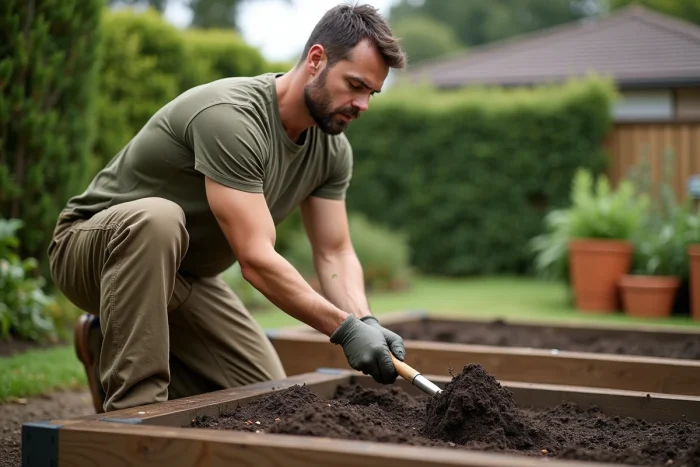
Tools for working the soil: adapt the tool to the soil, not the other way around
The soil dictates the choice of tool, not the other way around. Three characteristics matter: texture (clay, loamy, sandy), compaction, and the desired working depth.
Compact or clay soil
A heavy soil that sticks to boots after rain requires tools capable of fracturing without turning deeply. The grelinette (or biogrif) works the soil by decompacting it without breaking its biological structure. Its long tines penetrate the hard layer where a traditional spade strains the back and creates a plow pan.
For larger areas, a counter-rotating tiller fragments the clay, but be careful not to use it on waterlogged soil: it turns the earth into compact mud instead of loosening it.
Light or sandy soil
A sandy, draining, and crumbly soil does not require heavy decompaction. A garden rake or a hoe is sufficient to incorporate compost at the surface. A common mistake is to oversize the equipment: a powerful tiller on sandy soil disperses organic matter instead of integrating it.
Lawn maintenance: mower, scarifier, and green waste management
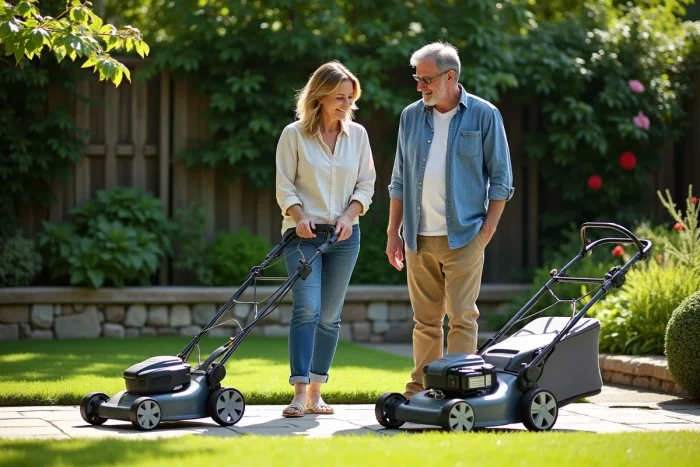
The mower remains the most essential purchase for a garden with a lawn. The main selection criterion is not the brand, but the cutting width relative to the lawn area.
- For a small lawn, a battery mower with a cutting width of 30 to 38 cm is suitable and easy to store.
- A medium-sized area calls for a width of 40 to 46 cm, with sufficient autonomy to cover the area in a single charge.
- Beyond that, a ride-on model or a robotic mower becomes relevant to reduce intervention time.
The scarifier operates once or twice a year to remove the thatch that suffocates the grass roots. An electric model is sufficient for most home gardens.
Since 2023, several metropolitan areas have strengthened the obligations for shredding and composting green waste, restricting burning and disposal at waste facilities. A domestic garden shredder becomes a useful tool: it turns pruning residues into reusable mulch directly at the foot of the plants, reducing trips to the waste facility and improving soil structure.
Trimming hedges and shrubs: cut just right, not often
The choice of a trimming tool depends on the diameter of the branches and the height of the vegetation. Confusing pruners, hedge trimmers, and loppers leads to messy cuts that weaken the plants.
- The bypass pruner is suitable for green shoots up to about 2 cm in diameter. A quality blade (hardened steel, non-stick coating) reduces effort and produces a clean cut that heals quickly.
- The hedge trimmer, whether manual or battery-powered, is used on dense and regular hedges. A battery model with a double-action blade limits vibrations and reduces noise.
- The lopper (or branch cutter) takes over for larger diameter branches, thanks to its long arms that multiply force without needing to climb a ladder.
- For tall trees, a battery pole saw allows you to reach high branches from the ground, minimizing the risk of falls.
Each cutting tool requires regular sharpening and disinfection between diseased plants. A poorly sharpened pruner crushes the fiber instead of cutting it, opening the door to pathogenic fungi.
Durability and maintenance of equipment: what truly extends lifespan
A well-maintained tool lasts several decades, while a neglected tool needs replacement every two or three years. The total cost of garden equipment includes its maintenance, not just its purchase price.
Manual tools made of carbon steel (spade, grelinette, pruner) rust quickly without care. Cleaning after each use, followed by wiping with an oiled cloth on the metal parts, is enough to prevent corrosion. For lithium-ion battery tools, storing the battery partially charged in a dry, temperate place preserves its capacity over the long term.
Storage is as important as cleaning. Hanging tools on wall hooks in a closed shed protects the blades from moisture and avoids impacts. A wooden wall rack is inexpensive and organizes space better than a pile of tools left in a corner of the garage.
Purchasing garden equipment should be viewed as a ten-year investment, not a one-time expense. Three quality tools are better than ten fragile gadgets: a good pruner, a sturdy grelinette, and a mower suited to the area cover most of the needs of a home garden.