A wedding animation refers to any scheduled activity between the key moments of the day (ceremony, cocktail reception, meal, dance party) to maintain collective energy and create interactions among guests. Choosing the right animations involves calibrating their format to the venue, the profile of the guests, and the natural transitions of the schedule.
Quiet spaces and inclusive animations for all guests
Festive weddings with high intensity (DJ, group games, shows) are not suitable for all profiles present. In recent years, wedding planners and associations like Asperger Amitié or the French Federation of DYS have recommended integrating a quiet space with soft lighting and simple games for neurodivergent individuals, hypersensitive people, or those prone to social anxiety.
The idea is to reserve a corner away from the dance floor, equipped with a few armchairs, noise-canceling headphones available, and silent card games or puzzles. The investment remains modest, and the benefit also extends to tired children, grandparents who wish to take a break, or introverted guests.
Planning this type of setup from the venue scouting phase allows it to be integrated into the seating plan without improvisation on the big day. Several catalogs of animations on the Mariage Service website offer packages combining collective activities and withdrawal zones, simplifying logistics.
Low-tech animations for a disconnected wedding
The magazine Rock My Wedding has been describing a clear shift towards what it calls “tactile, analogue moments” since late 2024. In practice, this means replacing screen-based animations (digital photo booths, tablet quizzes) with physical formats that encourage direct contact.
Giant wooden games and hands-on workshops
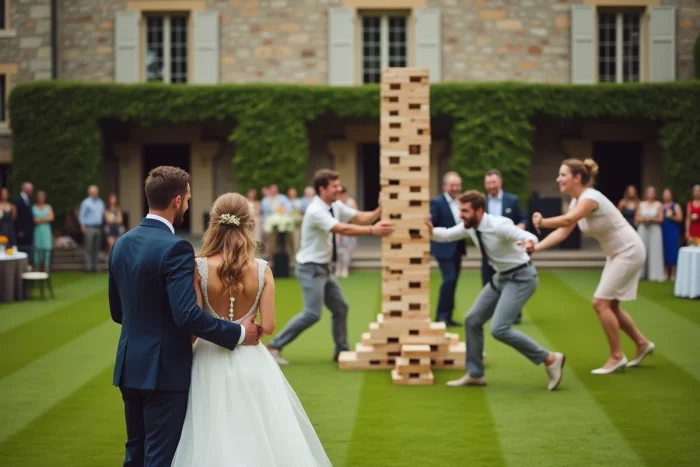
Oversized Mikado, shuffleboard, Finnish skittles: these games can be set up outdoors during the cocktail reception and work without explanation. Guests spontaneously join in, in groups of two to six, mixing tables well before dinner.
For workshops, creating personalized cocktails or icing cupcakes offers a short activity (about ten minutes per person) that produces a tangible result. A workshop works better when it has a limited duration and a visible outcome: a drink to taste, a floral bracelet to keep, a calligraphed card to take home.
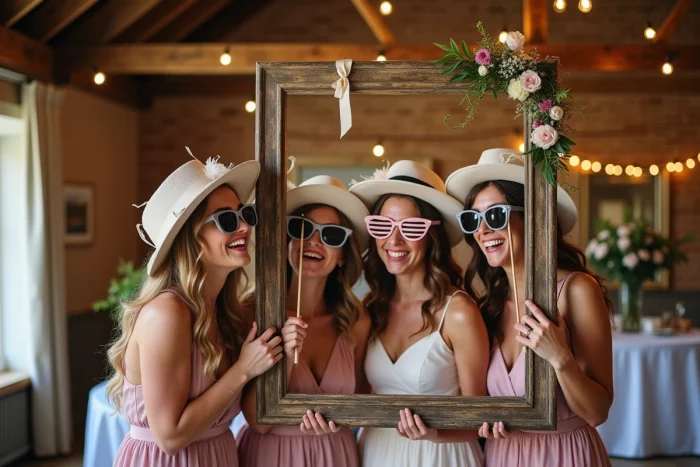
Film or Polaroid photo booth
The Polaroid booth remains a safe bet, but its appeal lies in the instant paper format. Each guest leaves with a print, sticking a second one in a collective album that replaces the traditional guestbook. The physical medium creates a memory that no one will lose in a phone folder.
Evening animations that revive the atmosphere after the meal
The energy dip almost always occurs between dessert and the opening dance. This is when the most participatory animations make the most sense.
- The killer game distributed at the beginning of the evening: each guest receives a card with an absurd mission to accomplish on a specific target (make the groom’s father dance, get a drink served by a witness). The gradual elimination maintains a thread of suspense over several hours.
- The blind test by tables, with a playlist that mixes generations, turns the moment between cheese and the wedding cake into a friendly competition. Planning about ten songs is enough to keep the pace without stretching the game.
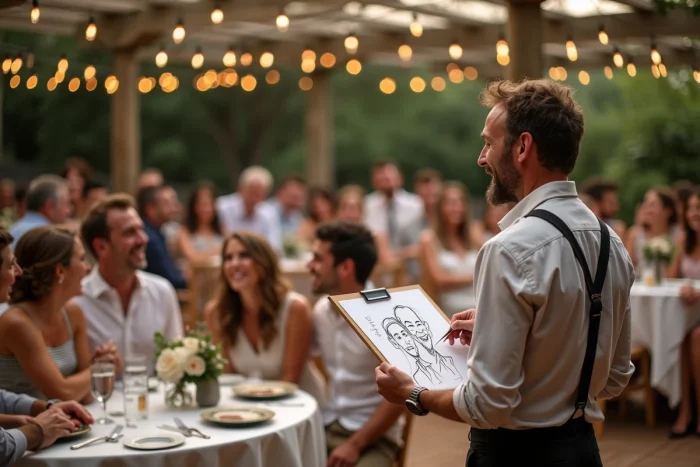
- A short close-up magic show during coffee: the magician moves from table to table, avoiding the “stage facing the audience” format and creating moments of surprise in small groups.
Visual shows to close the day
Fireworks, fire or LED shows, and the release of biodegradable lanterns: these closing animations leave a lasting memory because they create a clear visual break from the rest of the celebration. Their effectiveness relies on a simple principle: one well-placed spectacular animation is worth more than three in succession.
The light drone show, mentioned by several providers recently, offers customizable aerial choreographies (initials of the couple, symbolic shapes). The cost remains high, but the visual effect surpasses that of a traditional firework display in locations where regulations limit pyrotechnic devices.
Check feasibility before booking
Any outdoor show depends on local constraints: prefectural orders on fires, proximity to wooded areas, noise levels allowed after a certain hour. Contacting the town hall of the reception venue several months in advance avoids unpleasant surprises. Some estates already include partnerships with licensed pyrotechnicians, simplifying the process.
Calibrating the number of animations to the actual duration of the reception
A common mistake is to pile up activities. The wedding day already has natural highlights (ceremony, speeches, first dance) that structure the guests’ experience. Adding too many animations creates fatigue and hinders free conversations, which remain the true engine of the atmosphere.
- For the cocktail reception: one or two freely accessible games (photobooth, wooden games) and possibly a short workshop.
- For the evening: one collective participatory animation (blind test, killer) and a visual show to close.
- For children: a dedicated space with coloring, board games, and, if the budget allows, a dedicated entertainer during the meal.
Three or four well-distributed animations throughout the day are enough to maintain energy without turning the celebration into a summer camp program. The free time between activities gives guests the space to meet, chat, and enjoy the venue, often producing the best memories of the day.