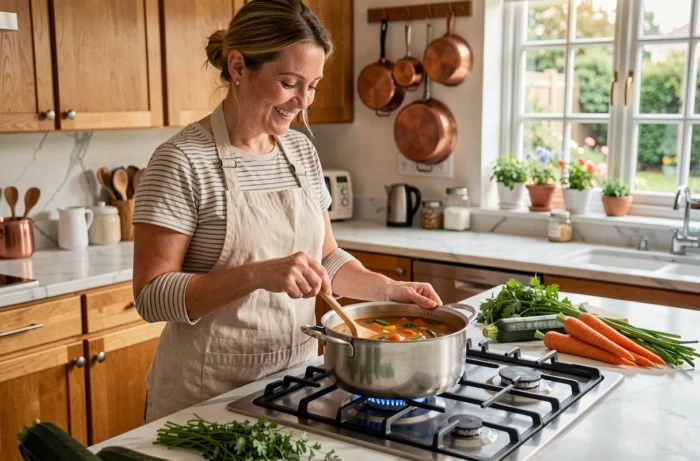
Delighting the whole family on a daily basis involves juggling constraints that recipe collections rarely address: differing tastes by age, compressed preparation time during the week, a tight food budget, and leftovers that end up in the trash. Everyday meals are not just a list of dish ideas. They raise a question of overall organization, where balance is built over several days and where every tip counts to limit waste.
Frozen vegetables and canned goods: underestimated allies in family cooking
The “all fresh” reflex remains ingrained in habits, but it creates two concrete problems for families: longer preparation time and a higher loss rate when vegetables are not consumed in time. Santé publique France recommends getting children used to vegetables in different forms, whether fresh, frozen, or canned, raw or cooked.
A frozen vegetable gratin (broccoli, spinach, zucchini) requires less preparation than a gratin made with fresh vegetables, for a comparable nutritional result. Canned vegetables, rinsed, also work well in a quiche or a pasta sauce.
For the whole family to benefit, it often suffices to access the Foodies and Family website to find combinations suitable for both children and adults, then adapt them with what is on hand.
Frozen vegetables or plain canned goods are not second-choice solutions. They reduce waste and the time spent in the kitchen, two major obstacles for families cooking during the week.
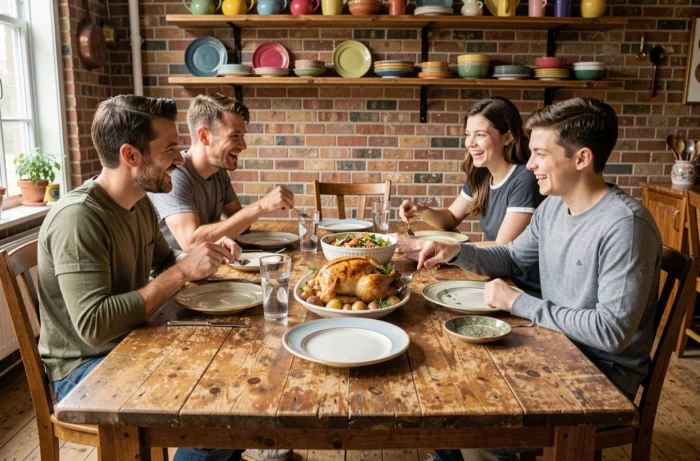
Family dietary balance: thinking about the week rather than the plate
Trying to create a perfectly balanced meal every evening generates unnecessary pressure. Dietary balance should not be judged on a single meal but over the day and the week. A very simple dinner, or even a less varied packed lunch, can still be compatible with a healthy diet if the other meals compensate.
This approach changes the way menus are planned. If children eat at the canteen at noon with a structured meal (vegetables, starches, proteins), dinner can be lighter: a homemade soup, pasta with cheese and a salad, or a filled omelet.
A simple guideline for structuring meals
The recommended guideline for a family dish is to include vegetables, starches or legumes, and a source of protein, with portions adapted to age and appetite. The same dish can suit the whole family from the age of four, without needing to prepare a separate plate for the children.
- Adjust the quantity rather than the recipe: a five-year-old eats the same leek quiche as an adult, in a smaller portion
- Vary the forms of vegetables throughout the week: raw on Monday, in a gratin on Tuesday, in a sauce on Wednesday, to avoid monotony
- Include a whole grain starch (semi-complete rice, whole pasta, lentils) at least three or four evenings a week for fiber
A simple dinner does not compromise overall balance if the rest of the day provides the necessary variety. This is a point that recipe lists almost always overlook.
Food waste in daily life: family meals on the front line
Competing pages focus on dish ideas without addressing waste, while families with children are particularly exposed: poorly calibrated portions, unused meal leftovers, fresh fruits and vegetables forgotten at the back of the refrigerator.
Three concrete levers for cooking without throwing away
- Use leftovers in the next day’s dish: leftover roast chicken becomes a quiche or wrap filling, a bit of tomato sauce transforms into a soup base
- Freeze excess portions the same evening, rather than waiting for them to linger for two days in the refrigerator
- Plan weekly menus based on what is already in the pantry and freezer, not starting from a theoretical shopping list
Planning meals based on existing stock reduces unnecessary purchases and provides a realistic framework for the week. This reverse logic, from the pantry to the menu rather than from the menu to the shopping, remains the most effective method to limit losses.

Everyday family recipes: betting on the versatility of dishes
Some homemade recipes offer a significantly better effort-result ratio because they can be varied, reheated, and appeal to all ages. Gratin, quiche, and casserole share a common point: they accept variable ingredients without changing the technique.
A vegetable quiche works just as well with frozen spinach as with fresh zucchini or a leftover ratatouille. A cheese pasta gratin can be enhanced with leftover ham or canned tuna. The versatility of a dish matters more than its sophistication when cooking for a family during the week.
Batch cooking adapted to real constraints
Preparing on Sunday for the whole week works on paper, but feedback on this point varies. Many families give up after a few weeks because the Sunday preparation time is too burdensome. An intermediate approach is to prepare two versatile bases (a homemade tomato sauce, a batch of roasted vegetables) and combine them differently over three or four meals.
Two basic preparations are enough to vary dinners over several days. The tomato sauce can go with pasta on Monday, on a homemade pizza on Wednesday, in a rice dish on Friday. The roasted vegetables can accompany meat, fill a quiche, or complement a mixed salad.
Integrating vegetables into beloved dishes (gratin, sauce, quiche) remains more effective than serving them as a separate side, often pushed to the edge of the plate. Cooking vegetables in the main dish increases their acceptance by children, without conflict at the table or a special plate to prepare.