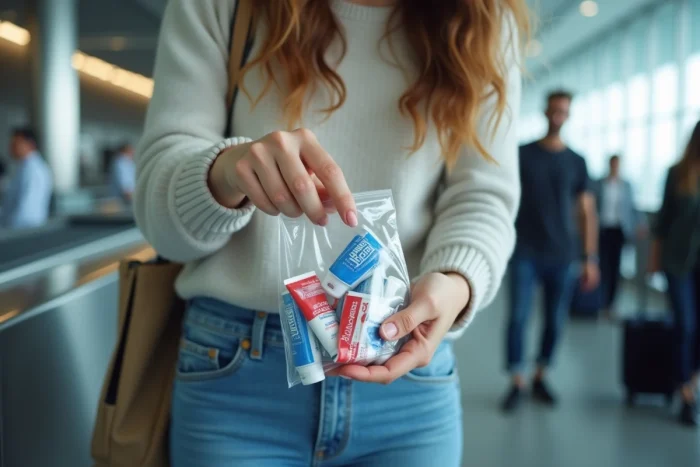
A tube of toothpaste rarely escapes the vigilance of airport security checks. An insignificant detail on the bathroom shelf, it suddenly becomes a real regulatory issue as soon as you enter a terminal. The displayed volume, the material of the tube, and the nature of the product weigh in the balance: suddenly, every gram and every milliliter counts. Bringing your toothpaste on board requires attention and anticipation, at the risk of seeing your faithful tube end up in the security check trash.
Classified as liquids or gels, toothpaste must comply with the famous limit of 100 ml to pass through security. It doesn’t matter if there’s only a little left: it’s the displayed capacity that counts. In most airports, it’s impossible to bypass the requirement for a transparent, resealable plastic bag, which must be presented to the agents. The slightest oversight, and the item can be confiscated before the journey even begins.
In response to these regulations, travelers find ways to adapt. Some opt for mini formats, while others choose tablets or solid alternatives, increasingly available in eco-designed aisles and from hoteliers. But nothing is ever completely fixed: the strictness of the checks determines the fate of your toiletry bag, fluctuating with the airlines and countries crossed.
Understanding the rules: what does the regulation say about your toothpaste on a plane?
The requirements for transporting toothpaste on a plane are clear and aligned at the European level. At Roissy, as in any airport on the continent, toothpaste, whether paste or gel, is treated as a liquid. This classification implies a strict limit: a maximum container of 100 ml, placed in a transparent plastic bag of one liter in total. The label on the tube is what counts during the check, regardless of the remaining quantity.
For airlines, the rule is the same for everyone. Each hygiene product (including toothpaste) must be removed from hand luggage and presented for inspection. Prescription medications and baby food receive special treatment, subject to justification. Only duty-free purchases made after security checks escape the volume limitation.
When you check your suitcase into the hold, the framework widens: containers up to 500 ml are accepted, with a limit set at 2 liters per suitcase. Gels and pastes can therefore travel more freely, as long as the threshold is not exceeded. All sharp objects are banned in the cabin, but toothpaste remains allowed as long as it adheres to the stated rules. Ultimately, successfully bringing your toothpaste on board is mainly about anticipating what awaits you at security.
Liquid, solid, powder: how to choose your toothpaste for travel?
The regulations make a clear distinction based on the format. If your toothpaste is in paste or gel form, it is subject to the same rule as liquids in the cabin: a maximum of 100 ml, within the one-liter plastic bag. Even a heavily used tube won’t pass if it displays 125 ml on the packaging. This constraint applies to all European flights departing from France, with very few exceptions, except for medical prescriptions or specific dietary needs.
Solid formats break this logic. Toothpaste in tablets, powder, or block form: at the airport, these products are not considered liquids. Their transport is freely allowed in hand luggage, with no volume restrictions or mandatory passage through the transparent plastic bag. This choice is increasingly appealing, especially since eco-friendly alternatives are abundant, reducing plastic use and simplifying luggage preparation.
To clarify, here’s how these rules apply according to the form of toothpaste:
- Paste / gel toothpaste: treated as a liquid, limited to 100 ml in the cabin, transparent bag required
- Solid, powder, or tablet toothpaste: free access, no volume limit in hand luggage
Choosing solid options means avoiding the stress of security checks, lightening your toiletry bag, and, incidentally, making an environmentally friendly choice.
Optimizing your toiletry bag before boarding: practical tips
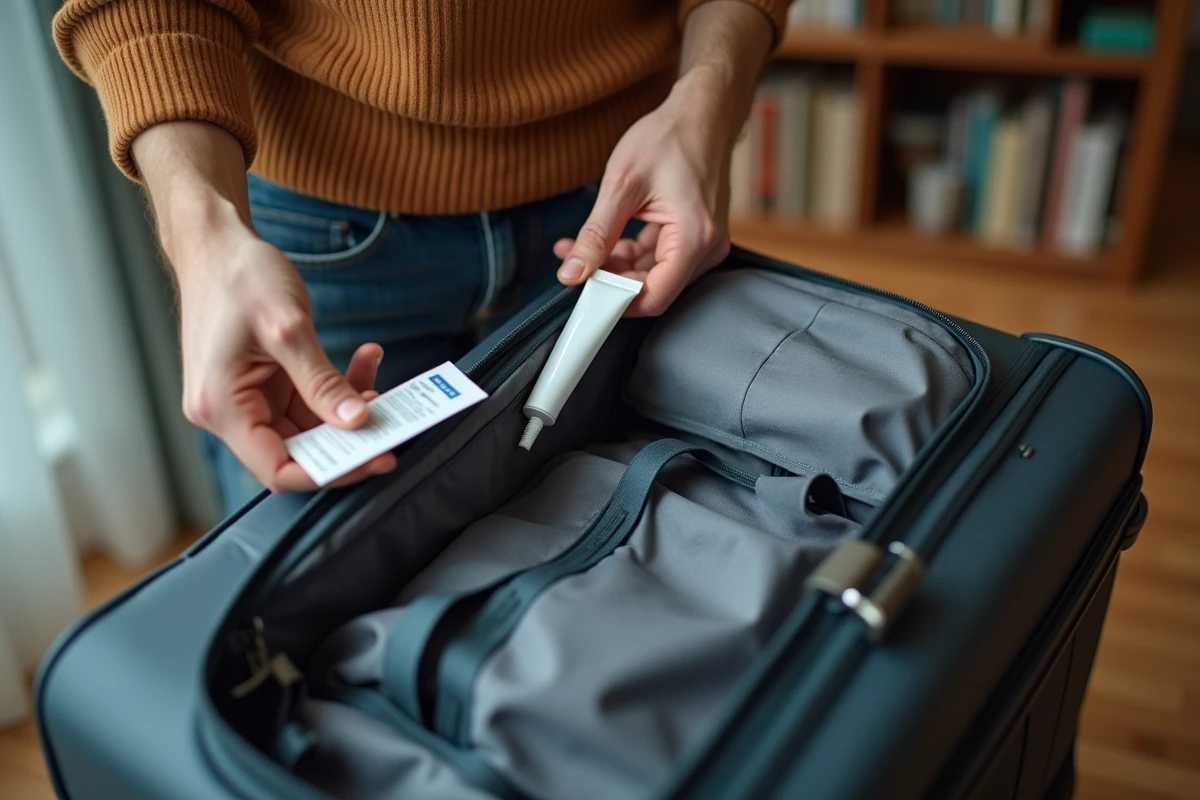
An express check requires preparation. To avoid wasting time, organize your toiletry bag around the requirements for hand luggage. Choose a transparent, resealable plastic bag of one liter to place shampoos, gels, creams, and tubes, all under 100 ml. Don’t hope to “cheat” with a large container that’s half empty: only the original capacity counts during the scanner check.
To stay calm, prioritize solid or powder toothpaste, and invest in compact travel sizes for the rest of your products. Many brands now offer cosmetics designed to simplify life at security. For containers, aim for leak-proof options, and to avoid breakage and spills, prefer sturdy plastic over fragile glass.
Add a foldable toothbrush, a mini comb, or a solid lip balm to your bag: these are companions without constraints or mandatory passage through the liquid bag. Just place the latter separately on the conveyor at the scanner, taken out of the suitcase: everything goes faster, without stress or unpleasant surprises at the boarding gate.
Keep this image in mind: you pass through security, your bag perfectly prepared, the tube of toothpaste (or its tablets) approved by the agent, promising a journey where neither hygiene nor regulations spoil the pleasure of departure.