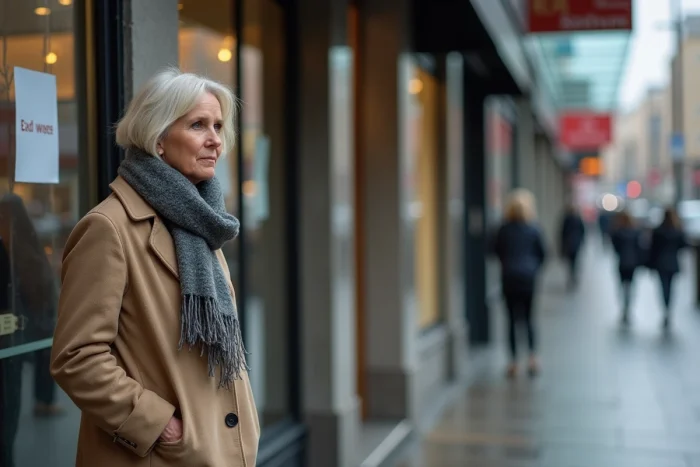
2,000 square meters of fashion evaporated in one night. Since June 30, 2024, the Zara store located in the La Praille shopping center in Geneva has ceased operations. This closure comes amid a context where the Inditex group is making adjustments to its network in Switzerland, citing reasons of profitability and changing consumer habits.
The decision affects a sales area of over 2,000 m², which has been established for nearly twenty years in the Geneva metropolitan area. The affected employees have received internal reassignment proposals, while management mentions a strategy of refocusing on other retail locations and developing online commerce.
Closure of Zara La Praille in Geneva: key facts and local context
The closure of Zara La Praille in Geneva does not go unnoticed. Inditex, the Spanish giant behind Zara, continues its streamlining efforts, primarily targeting stores in peripheral areas or in less densely populated cities. What is happening in Geneva is not an isolated case: in recent months, stores in Angoulême, Saint-Nazaire, and Valence have closed, while brands in major cities like Paris, Angers, or Brest remain strong. The brand is adjusting its physical presence, driven by declining foot traffic in many shopping centers and the rise of digital commerce.
This departure of Zara leaves a void in the commercial ecosystem of La Praille. Nearby businesses must rethink their strategies, and employees are facing uncertainty. Internal reassignment proposals, without geographical guarantees, do not always provide reassurance. Elsewhere, this approach has already caused discontent. In Saint-Nazaire, elected official David Samzun sharply criticized Inditex’s attitude, which he deems disconnected from local realities. For Jean-Michel Sarget, who manages the Ruban Bleu shopping center, these closures undermine the attractiveness of already fragile locations, facing a decline in customer traffic.
Inditex drives its strategy from Arteijo, in Galicia, and centralizes its decisions. Since 2020, nearly 2,000 stores have closed worldwide. The group is refocusing its efforts on urban areas with high potential, sacrificing historic locations in the process. The closure of Zara La Praille fits into this dynamic and raises the question: what will become of peripheral shopping centers and the local economic fabric? For a deeper analysis, see also: closure of Zara La Praille in Geneva.
What reasons explain this strategic choice of the brand?
The closure of Zara La Praille in Geneva stems from a strategy embraced by Inditex, which is revising its model to align with the upheavals in retail. Since 2020, the group has closed nearly 2,000 physical stores but maintains a network of 5,700 points of sale worldwide. This reorganization accompanies a visible phenomenon: the decline in foot traffic in peripheral shopping centers, a direct consequence of the rise of e-commerce and the transformation of shopping behaviors.
Consumers are increasingly turning to digital. Speed, availability, flexibility: these are the new demands. Inditex is responding by refocusing its stores in major metropolitan areas, optimizing the profitability of each space, and reducing losses where the dynamics are waning. The ready-to-wear crisis, which has shaken the sector for several years, accelerates this transformation: demand is stagnating or declining in less populated areas, forcing large groups to make choices.
This direction is not merely about adaptation; it follows strict financial logic. Despite the reduction of its network, Inditex achieved over 35 billion euros in revenue in 2023, with profits up nearly 30%. The group is betting on profitability, even if it means reducing its territorial presence. The goal: to support performance, accompany the sector’s transformation, and respond to an increasingly connected clientele.

The future of Zara in Switzerland and prospects for the ready-to-wear sector
The disappearance of Zara at La Praille raises questions about the brand’s place in Switzerland. Inditex has chosen to consolidate its presence in major urban centers, gradually abandoning the periphery. This movement reflects a real break from the all-out expansion logic that prevailed just a few years ago. Geneva, a cosmopolitan crossroads, retains all its attraction; however, in less central areas, the trend is reversing, similar to what is happening elsewhere in Europe.
The ready-to-wear sector is undergoing a period of upheaval. E-commerce is gaining ground, second-hand is becoming established, and customer expectations are evolving. New generations, millennials, fashion enthusiasts, and volatile buyers seek novelty, immediacy, and adaptability. Zara, with its image and constant renewal of collections, still attracts, but must contend with ever-changing consumption patterns.
The physical store is not disappearing; it is transforming: personalizing the experience, digitalization, enhancing exclusivity. Inditex, by selectively streamlining its Swiss stores, seeks to enhance Zara’s appeal while managing its costs. For employees, the reality is harsher: accepting a reassignment sometimes far from home or leaving the ship. This wave of transformations affects the entire Swiss textile sector: adjustments, rationalization, and the search for new benchmarks are necessary. No one knows yet what commerce will look like tomorrow. But the curtains falling today are already shaping the landscape of the day after tomorrow.