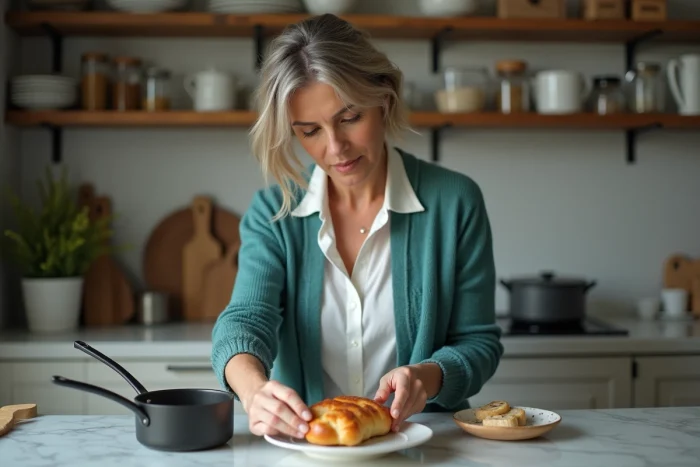
Steam has never performed miracles on a pastry that is too dry. A quick trip in the microwave, and the bouchée à la reine turns into a cardboard crust, the filling wilts, and the whole loses its luster. However, there are game-changing methods, provided you master them.
With each bite, there’s an equation: moisture, protection, and choice of heating method. Adapting the technique to the recipe is to give the pastry its original crispness and the filling all its generosity. A few adjustments are enough to transform the result.
Why do bouchées à la reine dry out easily when reheating?
The bouchée à la reine relies on a delicate balance: an airy puff pastry, a flowing and fragrant filling, all wrapped in a creamy sauce. As soon as you reheat it, the mechanics break down: the pastry loses its moisture, the filling can dry out or release water, and the contrast blurs.
The traditional oven is tempting for its enveloping heat, but without precautions, it dries everything in its path. In the microwave, it’s the opposite: the filling heats too much, the pastry collapses, and the texture is completely altered. On the stove or in a pot, the risk is overly intense heat: a second of inattention, and the base burns or crumbles.
To avoid these pitfalls, every detail matters. Aluminum foil or parchment paper to cover, a splash of water in the oven, sometimes even reheating in two stages: these gestures make a difference. The tips for reheating a bouchée à la reine are as much about passed-down know-how as they are about trial and error in everyday cooking, as detailed in the article “Bouchée à la reine: how to prevent it from drying out when reheating? – Blospot”.
The 5 essential tips to preserve moisture and flavors
Here are five techniques that make a difference for reheating a bouchée à la reine while maintaining its texture and taste:
- Bain-marie: this gentle method allows you to reheat the filling without aggression. Place it in a heat-resistant bowl set in a pot of simmering water: the sauce retains its flexibility, and the preparation stays moist.
- Aluminum foil or parchment paper: wrap the bouchée before placing it in the oven. This simple gesture protects the puff pastry from hot air, limits evaporation, and prevents it from drying out.
- Add a little water or sauce: pour a spoonful of water, cream, or sauce around the bouchée just before cooking. This adds the moisture that is often lacking and protects the tenderness of the dish.
- Separate reheating: heat the pastry and the filling separately, then assemble at the last moment. The result: a perfectly crispy pastry, a hot filling, nothing is sacrificed.
- Preheated plate and finishing touches: serve the bouchée on a warm plate. A few sprigs of parsley, a zest of lemon, or a pinch of fleur de sel enhance the whole and awaken the flavors just before tasting.
Focus on the storage and reheating of chestnuts: tips for a delicious result
Cooked chestnuts, a prized guest during autumn meals or slipped into a bouchée à la reine, require real attention when it comes to storing and reheating them. To keep them moist, leave them at room temperature if they are to be eaten within the day. Otherwise, head to the refrigerator, well protected in a closed box.
The traditional oven is suitable if the temperature is respected: 160 to 180 °C, no more than fifteen minutes. Spread the chestnuts on a baking sheet, cover with parchment paper, and for those who strive for perfection, add a touch of water. This little cloud of steam protects their tenderness.
In the microwave, reduce the power by half. Heat in several intervals, one to two minutes each time, stirring in between. The texture remains supple, the inside retains its sweetness, perfect for accompanying a sauce or filling a bouchée.
For defrosting, let them come back to room temperature. If time is tight, a few seconds in the microwave will suffice: the texture won’t harden, and the flavors will remain intact.
When it comes to bouchées à la reine or chestnuts, the details make the difference. At the moment of serving, a pastry that crackles, a filling that melts, that’s the true reward.